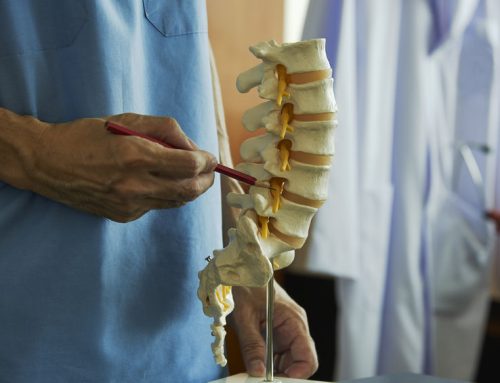
How Should You Address Back Pain?
Chronic lower back pain (LBP) is a challenging condition to overcome. This issue affects millions of adults, with some experiencing limited mobility and difficulty performing daily activities or working. If left untreated, chronic back pain can cost individuals significant time, lost opportunities, and even reduce life expectancy. Finding the underlying cause is essential to receiving the appropriate treatment. Some chronic back pain patients must choose between surgical and non-surgical options. Weighing the pros and cons of a spinal cord stimulator (SCS) or outpatient surgery can help patients manage back pain.

What causes chronic back pain?
There are many underlying causes of chronic back pain, with most being traced back to a spinal cord issue. Damage or changes to the spinal cord can lead to pressure or pinching of branch nerves, leading to back pain. Typical examples include herniated discs, spinal stenosis, bone spurs, tumors, and cysts, which press on nerves, causing pain. Trauma, injury, or a failed back surgery can cause ongoing pain. Doctors must identify the root cause of the back pain before recommending treatment. Most cases respond well to non-surgical means such as pain medication, physical therapy (PT), and lifestyle changes. If this fails, however, doctors may attempt more advanced procedures.
The power of an SCS
Some patients may opt for spinal cord stimulation as a non-invasive form of pain management. An SCS is a device that sends electrical signals to the nerves around the spine, disrupting pain signals responsible for the condition. Using long wires called leads, an electrical current is passed via a small battery-powered device. The leads are placed in the patient’s back to the spinal cord using a live x-ray process called fluoroscopy. Once the SCS reduces pain and is deemed successful, the device is surgically placed in the patient’s lower back or buttocks. SCS lasts several years and can be controlled wirelessly by the patient.
Thinking about outpatient surgery?
For severe or chronic cases of back pain, the medical team may consider outpatient surgery. This uses minimally invasive surgery (MIS) to locate and address the root cause of the back pain. This is a surgical procedure that uses multiple small incisions and a scope, a device with a camera and light attachment. The scope projects the spine on an external monitor, allowing the surgeon to perform the operation. The appropriate surgical procedure will be used based on the underlying condition. Some patients will need a laminectomy, which removes part of the vertebrae. Others will need part or all of a herniated disc removed. A spinal fusion may be necessary, which secures multiple vertebrae with metal fixtures, allowing the bones to fuse. The patient can leave the same day with outpatient surgery and begin recovery immediately.
Comparing our options
There are advantages, drawbacks, risks, and complications associated with both options. SCS can help effectively manage chronic pain. Outpatient surgery addresses the root cause by fixing structural problems causing pain. While outpatient surgery is minimally invasive, SCS is even less so as the implant is placed through a single small incision. As a result, outpatient surgery still removes natural components and has slightly more complications during and after the procedure. What makes SCS so appealing is that the process is reversible and helps with avoiding complex surgery. Surgical changes, however, are permanent and can even create new pain if the procedure is unsuccessful. Recovery also takes longer with outpatient surgery, but success rates are higher, and patients can address the root cause.
Which should you choose?
Patients should see how each procedure aligns with long-term health goals. SCS is ideal for chronic pain that is difficult to pinpoint, complex regional pain syndrome (CRPS), and failed back surgeries. Patients prefer this option if the goal is to avoid surgery and still receive some pain relief. Choose outpatient surgery if there is time to recover at home while addressing the root cause. Clear structural issues, like a herniated disc, will benefit from outpatient surgery. SCS does not impact the root cause but masks the symptoms. The minimally invasive nature of surgery means smaller incisions, less blood loss, and fewer complications. Patient health and long-term goals also guide the best option. Work with the surgeon to learn which option can improve the quality of life.